Thursday, November 28, 2013

Week 9


There really is no better way to finish the year then with the topic of space.  With robots, nanotechnology, nanoscience, math, biotech, and most importantly art, space incorporates everything that we have gone over throughout the year.  The thing I found most interesting about space and art was that space was portrayed through art before any human actually had been there.  As I learned last week art is giving us new ways of exploring space, through the space elevator and even space hotels.

1969 was the year that the first man stepped foot on the moon .  But by then many different TV shows and movies were already made about space.  TV shows such as Star Trek and the Jetsons and movies such as twelve to the moon and battle in outer space.  While these shows may have influenced the beginning of the “space age”, the “space age” influenced many more works of art.  Works such as E.T. Alien, Star Trek, and Superman followed the moon landing.  These works have art have used the information they found out about space, and then putting in more fictional information.  This made up information makes the world wonders if what are in these movies true.


Space has inspired many people in creating their art, such as Alan Bean.  Alan Bean was the 4th man to walk on the moon (Foust).  He now has been inspired by that trip and is recreating the moon through his art.  

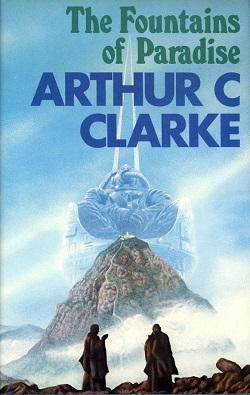
The space elevator was an idea in Arthur Clark’s The Fountain of Paradise before it was an idea of NASA and the scientists today (Horton).  Art today has made possible the idea of a space hotel.  The Russians have developed a space hotel sitting 250 miles above Earth (Lam).  This project is amazing, who would have thought that regular humans could spend a week vacationing in space instead of the Bahamas.   


Movies such as star trek today really have me excited about the future of space.  I really hope that one-day space travel will be available to all people.  Going to space, even for 5 seconds is number one on my bucket list.  I know that art is going to help this happen in the future.  

Bibliography
Arthur C. Clarke on the Space Elevator (and Star Trek and Other Things) - The Space Elevator Blog." Arthur C. Clarke on the Space Elevator (and Star Trek and Other Things) - The Space Elevator Blog. N.p., n.d. Web. 28 Nov. 2013.

Bean, Alan. "Greenwich Workshop - Alan Bean"" Greenwich Workshop - Alan Bean"N.p., n.d. Web. 28 Nov. 2013.

"BLOG :: Skyline Worldwide Accommodations » Russia to Build First Space Hotel by 2016!!" BLOG Skyline Worldwide Accommodations. N.p., n.d. Web. 28 Nov. 2013.

Creative Means." : Meet George Jetson. N.p., n.d. Web. 28 Nov. 2013.


"First Moon Landing 1969." YouTube. YouTube, 10 Feb. 2006. Web. 28 Nov. 2013.


Foust, Jeff. "When Space and Art Intersect." The Space Review:. N.p., 8 Sept. 2009. Web. 28 Nov. 2013.

Lam, Tiffany. "Russians Unveil Space Hotel." CNN Travel. N.p., 18 Aug. 2011. Web. 28 Nov. 2013.

Horton, Richard. "The SF Site Featured Review: The Fountains of Paradise." The SF Site Featured Review: The Fountains of Paradise. N.p., n.d. Web. 28 Nov. 2013.

Sunday, November 24, 2013

Week 8


Nanotechnology involves manipulating molecules and atoms, but the work of nanotechnology never can be seen.  The molecules are so small that they cannot be seen to the human eye.  The combination of art and nanotechnology is allowing scientists to go to new unchartered territory.   Changing science and technology forever.   
                  
Through art and nanotechnology the exploration of space could go where nobody has gone before.  First off nanotechnology can cut the cost of going into space by reducing the amount of rocket fuel required (Boysen).  Nanotechnology allows the designers at NASA to design smaller and lighter space equipment.  Already smaller spacecrafts called nanosats have been created using nanotechnology.   The goal for the future is to use nanotechnology to get people and spacecrafts to Mars and beyond.  Carbon nanotubes have led scientists to start working on a spectacular space event, the space elevator.  This would be a 22,000 feet long elevator that would go from the ocean to space.   This may seem physically impossible, but nanotechnology has made this seem realistic, because carbon nanotubes enable a cable that strong and high.  Although this idea will probably never be put into work, nanotechnology has made it seem realistic. 
(space elevator)

(nanosat)


Nanotechnology is also being used to save people’s lives.  Nanoparticles are being used in order to see blood cots (new nanoparticles).  This allows doctors to see clots that with normal technology they would not be able to detect.  Nanotechnology is being used in trying to find cancer cures.  When drugs are given to a patient they attack the sick cells but also attack the healthy cells, causing side effects.  Nanotechnology is trying to stop this.  Nanoparticles have been created to bring drugs directly to the infected cells.  Scientists now are trying to get the chemotherapy drugs to deliver directly to the cancer cells.  This would eliminate the terrible side effects of chemotherapy. 

(nanotechnology in cancer)

(nanotehnology in blood)


Nanotechnology just reassures more that art and science are closely related. Although nanotechnology is extremely expensive and may cost people jobs in the future, its benefits still outweigh the disadvantages.  20 years from now maybe cancer will be cured, there could be an elevator to space, or even we discover aliens on Mars. Everyone will have nanotechnology to thank.  

 Bibliography

Boysen, Earl. "Nanotechnology in Medicine - Nanomedicine." Nanotechnology in Medicine. N.p., n.d. Web. 20 Nov. 2013.

"Nanosat 01." Nanosat 01. N.p., n.d. Web. 24 Nov. 2013

"The Nanotechnology Times - Home." The Nanotechnology Times. N.p., n.d. Web. 24 Nov. 2013.


New Nanoparticles Make Blood Clots Visible." Nanowiki. N.p., 7 Feb. 2011. Web. 20 Nov. 2013.

Space Elevator." PBS. PBS, 09 Jan. 0000. Web. 20 Nov. 2013.


"The Space Elevator." YouTube. YouTube, 03 July 2007. Web. 24 Nov. 2013.

Saturday, November 16, 2013

event 2


On Wednesday November 6, 2013 I attended the Getty museum.  This was my first time ever at the Getty, even though I have lived 15 minutes away my whole life.  After getting of the tram up to the Getty I was immediately blown away.  After I got off the tram to my right was one of my favorite sculptures.  There was this sculpture made from pipes that stood 20-30 feet tall and the top was at an angle.  The sculpture looks impossible for a human to build.  This makes me think of the math and art week, because so much math was done to make this sculpture work.  If the pipes were one degree too far to the right or too heavy the sculpture would not work out. 

Before entering the museum we checked out the gardens around the Getty.  The view of LA from the Getty is one of my favorite views I have seen before.  I could see all the way from downtown LA to the beaches.  All around the Getty they have different pieces of art which involve rocks and water.


The first exhibit we went in consisted of many different sculptures.  The sculptures that interested me the most were the different sculptures of the mythological creatures.  This goes into the week 1 discussion of 2 cultures, the sculptures were made so that cultures could worship them, combining cultures and art.  


The next exhibit contained one of the best paintings I have seen out of all these events I have been to.  It was a Vincent Van Gogh painting, Irises worth 54 million dollars (peter).  For the rest of my life I can say that I got a picture next to a Van Gogh picture.


The next exhibit we attended contained tons of photographs.  The most interesting part of this exhibit was that it contained the first photograph ever, by William Henry Fox Talbot.  Besides this photograph this exhibit really showed the advances in technology and the effect it had on photographs.  We discussed this in week 3.  The Getty even incorporates technology to explain paintings, with the “getty guide”.    

I do not really think that 400 words can describe the Getty.  It was an amazing experience and I suggest it to everyone.  Whether you like art or not the Getty will still be beneficial.  The view will blow you away and the art will amaze you. 

Bibliography

Peter Passell; Peter Passell Writes About Economics For The New York. "Vincent Van Gogh, Meet Adam Smith." The New York Times. The New York Times, 04 Feb. 1990. Web. 17 Nov. 2013.